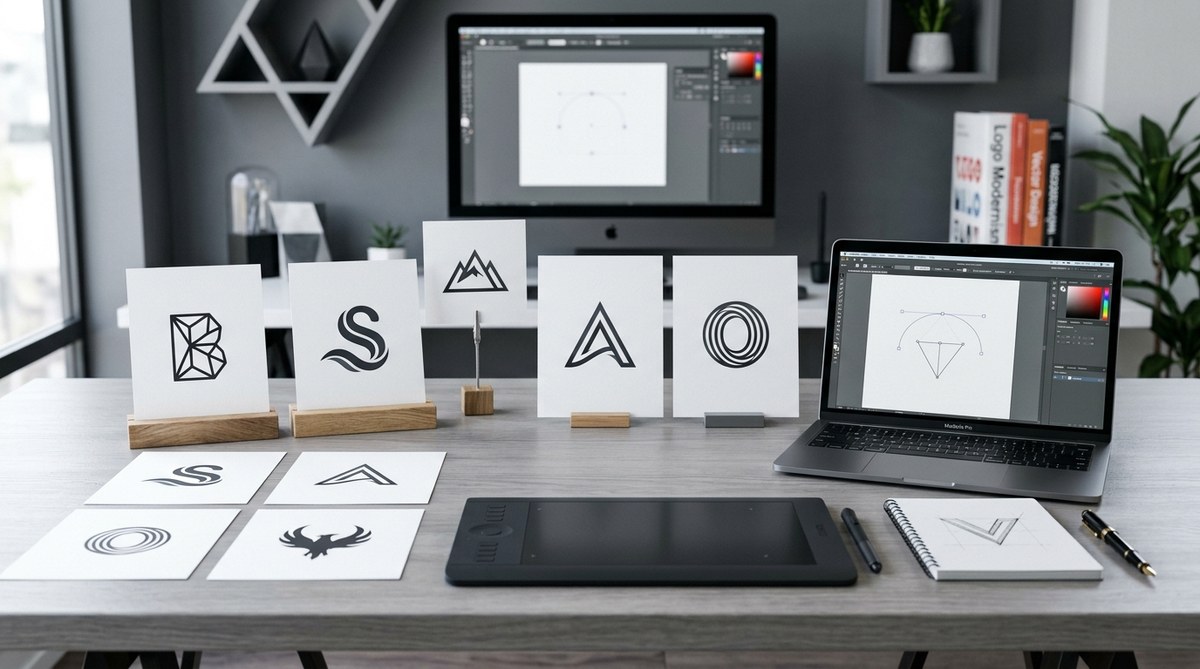
Creating a minimalist logo might seem straightforward, but designing one that truly captures a brand’s essence takes skill and a keen eye for detail. Minimalism is more than just using fewer elements; it’s about distilling a brand’s identity into its purest form. When done well, minimalist logos are powerful, memorable, and timeless. They cut through clutter and communicate clarity. This guide will walk you through the core principles, practical steps, and best practices to master minimalist logo design for your next project.
A successful minimalist logo simplifies a brand to its essential elements, using clean shapes and strategic negative space. It’s about clarity, purpose, and visual impact that lasts over time.
The Power of Minimalist Logos in Modern Branding
Minimalist logos are everywhere. Think of Apple’s apple, Nike’s swoosh, or Twitter’s bird. These logos thrive because they are simple yet distinctive. They offer instant recognition and work across various mediums. As brands face increasing competition, a minimalist approach helps stand out without overwhelming the viewer. It allows the brand’s message to breathe and resonates with audiences seeking authenticity and clarity.
Why Minimalist Design Works So Well
Minimalist logos focus on core visual elements. They strip away unnecessary details to highlight what truly matters. This approach aligns perfectly with the way people process information today. A clean, simple logo is easier to remember and more adaptable. It also ages better, avoiding the trap of fleeting trends. When a logo is minimalist, it can be resized, animated, or used in any context without losing impact.
Common Missteps in Minimalist Logo Creation
| Mistakes to Avoid | Why It Matters |
|---|---|
| Over-simplifying | Removing too much detail can make a logo forgettable or unclear. |
| Ignoring brand identity | A logo must reflect the brand’s personality, not just look minimal. |
| Using cluttered negative space | Negative space should enhance, not confuse. |
| Relying on trendy fonts | Trends date quickly. Choose timeless typography. |
| Inconsistent scaling | The logo should look good at all sizes. |
How To Approach Minimalist Logo Design
Designing a minimalist logo involves a clear process. Here are three practical steps to guide your work:
-
Research and Understand the Brand: Know what the brand stands for. What are its core values? Who is the target audience? Gather visual assets, competitor logos, and inspiration.
-
Simplify and Conceptualize: Start by sketching broad ideas. Focus on basic shapes, symbols, or initials that convey the brand’s personality. Avoid details that don’t add value.
-
Refine and Test: Narrow down your concepts. Test how they look in different sizes and on various backgrounds. Make sure they remain recognizable and effective.
Techniques for Effective Minimalist Logos
To craft logos that speak to the modern aesthetic, consider these key techniques:
- Use geometric shapes for clarity and balance.
- Incorporate negative space creatively to add depth.
- Limit your color palette to one or two shades.
- Select typography that is clean and straightforward.
- Focus on proportion and symmetry for visual harmony.
Common Pitfalls to Watch Out For
While designing, steer clear of these pitfalls:
- Overcomplicating shapes or symbols.
- Using trendy fonts that fade quickly.
- Ignoring scalability and adaptability.
- Neglecting brand personality in the design.
- Relying solely on color to communicate meaning.
Techniques vs Mistakes Table
| Technique | Mistake to Avoid |
|---|---|
| Geometric shapes | Cluttered, cluttered shapes |
| Creative negative space | Confusing or hidden symbols |
| Limited color palette | Overly colorful or mismatched |
| Clean typography | Using ornate or hard-to-read fonts |
| Balanced proportions | Unbalanced or awkward layouts |
“A great minimalist logo is not just about removing elements, but about choosing the right ones to tell a story with simplicity.” — Design expert Jane Doe
Practical Guide to Creating Your Minimalist Logo
Here’s a straightforward process to follow:
- Research your brand thoroughly to understand its essence.
- Sketch multiple ideas—don’t settle on your first concept.
- Select the strongest ideas and develop digital versions.
- Apply minimalist principles: remove unnecessary details, focus on shape and space.
- Test across various mediums: print, web, social media.
- Refine your design based on feedback and testing.
- Finalize and prepare files for delivery.
Embracing Negative Space for Impact
Negative space can be a powerful tool in minimalist logos. It allows the design to breathe and adds hidden meaning or clever visual tricks. For example, the FedEx logo uses negative space to form an arrow, symbolizing movement and progress. When used thoughtfully, negative space can elevate a simple design into something memorable and engaging.
Keeping Up with Trends and Future Trends
While minimalism is timeless, staying aware of current trends helps keep your designs fresh. Flat design, bold lines, and simple icons continue to dominate. Future trends hint at more dynamic and animated minimal logos, suitable for digital platforms. However, the core principles of clarity and simplicity remain constant.
Final Tips for Your Minimalist Logo Journey
- Focus on the essence of the brand.
- Keep your designs simple but meaningful.
- Use negative space cleverly.
- Test your logo in various sizes and contexts.
- Be patient and open to iteration.
Bringing It All Into Focus
Mastering minimalist logo design involves understanding the balance between simplicity and expression. It’s about capturing a brand’s spirit with as few elements as possible. Practice regularly, analyze successful logos, and don’t be afraid to experiment. Remember, the best logos are those that stay in people’s minds long after they see them.
Designing effective minimalist logos is a skill that grows with time and experience. Keep refining your process, stay inspired, and your logos will stand out in the crowded modern landscape. The next time you start a new project, challenge yourself to strip away everything unnecessary and focus on what truly communicates the brand’s core message.